















The best composting toilet for a tiny home is the system that fits the building, the real occupancy and the way the home will be used—not simply the smallest toilet that fits through the door.
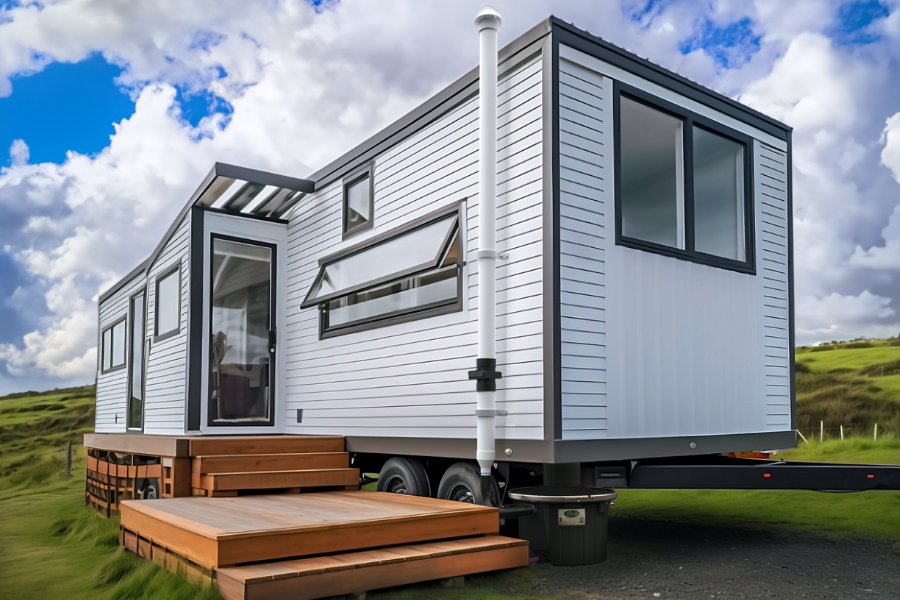
A permanent tiny home can create full household loading every day of the year. A tiny home on wheels may also need the toilet and underfloor equipment to travel safely when the building moves.
For many permanent tiny homes with suitable clearance, a low-profile batching split-system provides the strongest balance of bathroom comfort, treatment volume and maintenance outside the living space.
The short answer
Start with the building form. If there is about 500 mm of accessible underfloor space, consider a Nature Loo™ Alectura batching system. If the home is on a slab or has no suitable subfloor, compare larger self-contained residential systems. Use compact mobile container toilets when mobility and regular container handling are genuinely the priority.
A small floor area can still carry full-time sanitation loading
Tiny homes reduce building footprint, but they do not automatically reduce the number of showers, meals, laundry loads or toilet visits made by permanent occupants.
The toilet should therefore be selected using realistic full-time or part-time loading, not the number of square metres in the home.
For permanent living, WCTNZ® prefers credible treatment volume and serviceability over designing around the smallest possible waste container.
Low-profile batching split-systems
A split system keeps the pedestal inside the bathroom and the composting chamber beneath the floor. This gives the room a familiar appearance while placing treatment volume and routine chamber work outside the living space.
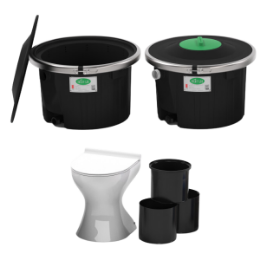
The Nature Loo™ Alectura Comfort and Alectura Premium are designed around approximately 500 mm of underfloor clearance.
Two chambers operate in rotation. An active chamber receives waste, while the out-of-service chamber is given additional treatment and resting time.
Why batching often suits permanent tiny homes
- A porcelain pedestal and uncluttered bathroom.
- More treatment volume than many compact container toilets.
- Chamber servicing outside the living space.
- Low-voltage ventilation rather than high treatment-energy demand.
- The option to move the system with a transportable building when disconnection and transport are planned correctly.
Choose the Alectura package around operation and handling
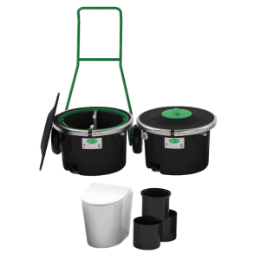
Alectura Comfort provides the core two-chamber batching system. Alectura Premium adds dual mixer blades and an Ezylift trolley.
Mixing can level the pile and make better use of the chamber. The trolley supports safer movement around a suitable service area. Those features can be valuable where the household wants the most developed chamber-management package.
Self-contained residential systems
A concrete slab, upper floor or tightly constrained structure can rule out an underfloor chamber. In that situation, the strongest answer may be an on-floor residential system rather than a mobile container toilet.
Systems such as the EcoLet™ 25a, EcoLet™ 65a and Sun-Mar™ Excel NE solve different power and processing requirements.
Self-contained systems put more of the treatment and servicing inside the bathroom, so check footprint, access, ventilation, power and the removal pathway before purchase.
Urine-diverting container toilets
For genuinely mobile tiny homes, RV-style toilets can offer compact size and straightforward container access. They are designed around a different servicing model: more frequent handling and less long-term retention inside the toilet.
Examples include the CompoCloset™ Cuddy, Trelino® Evo S and EcoLet™ Separera Mini UD-C.
A compact mobile toilet can be excellent at its intended job without being the best benchmark for a permanent full-time home.
What to establish before choosing the model
| Question | Why it changes the answer |
|---|---|
| Is the home permanently occupied? | Full-time loading needs greater capacity and a realistic service interval. |
| Is there accessible underfloor space? | Determines whether a split chamber can be used. |
| Will the home move regularly? | Chambers, chute and vent components need a safe transport and reconnection plan. |
| What power is available? | Passive, low-voltage and heated systems place different loads on the site. |
| How will greywater be managed? | The toilet does not remove shower, kitchen or laundry wastewater. |
Make the system movable by design
A transportable building can use a split composting system, but the installation should anticipate relocation. The chamber and chute need to be disconnected safely, openings secured and the equipment transported without damage or leakage.
The new site then needs the same fundamentals: clearance, support, ventilation, liquid management and a lawful wider wastewater arrangement.
Transportable does not mean approval travels automatically. Site and service requirements need to be confirmed at the destination property.
Tiny home composting toilet FAQs
What is the best composting toilet for a permanent tiny home?
Where suitable underfloor clearance exists, WCTNZ® generally favours a low-profile batching split-system because it provides treatment volume outside the bathroom and chamber rotation.
What if my tiny home is on a concrete slab?
Compare self-contained residential systems or compact container models according to occupancy, power and maintenance expectations.
Can a split-system move with a tiny home?
Yes, where disconnection, transport and reinstallation are planned. The new site must still provide the required clearances and wastewater pathway.
Are RV composting toilets suitable for permanent tiny homes?
They can suit owners who accept frequent container management, but their compact architecture should be compared with larger residential treatment systems before selection.
Does a composting toilet remove the need for greywater management?
No. Shower, basin, laundry and kitchen wastewater still need a suitable treatment or discharge arrangement.
Choosing a toilet for a tiny home?
Tell WCTNZ® whether the home is permanent or mobile, the expected occupancy, available clearance and power supply. We can narrow the system type before the model.