












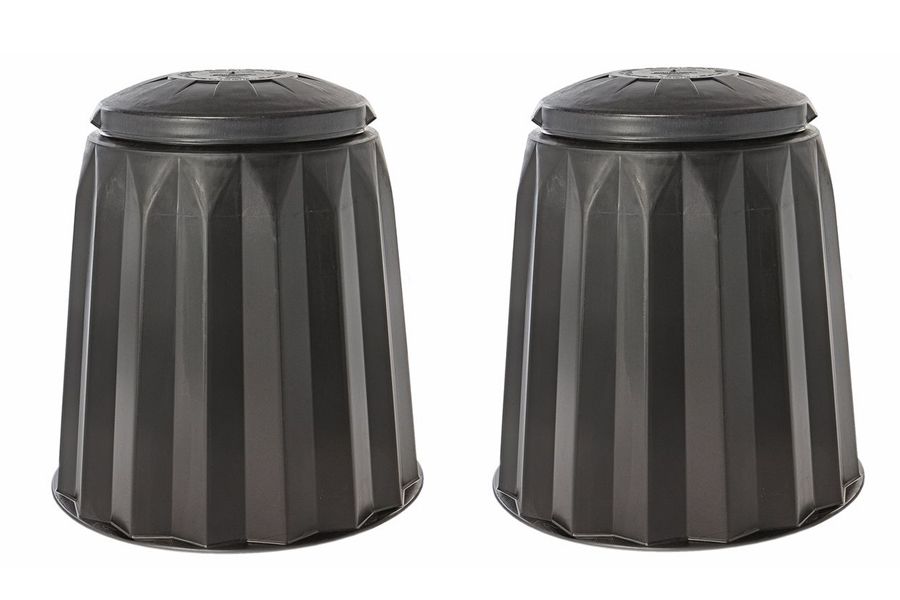
If your composting toilet needs emptying before the waste has finished composting, what happens to the material next?
That's what a secondary treatment system is intended to deal with: giving partly processed toilet waste somewhere suitable to finish treatment before final removal.
Older advice often suggested buying two ordinary garden compost bins, filling one while the other rested, and repeating the cycle. That sounds simple, but a garden bin and a waiting period don't, by themselves, make an accepted human-waste treatment system.
So, let's look at what you actually need, and when it may make more sense to choose a composting toilet that finishes the process in its own chambers.
Can you set one up?
Potentially, yes—but it needs to be a properly designed part of your toilet-waste management, not just a couple of garden bins. For a residential installation in New Zealand, establish the requirements with the relevant council and an appropriately qualified wastewater designer before buying or installing the external treatment equipment. Supporting engineering evidence and council acceptance may be necessary; approval should not be assumed.
First, check whether you actually need one
Many composting toilet systems already have a designed way of treating and resting the waste. With a batching split-system, for example, the full chamber can be taken out of service and left to continue composting in that same purpose-designed chamber. Continuous systems and some processor systems also manage treatment and finishing within their own equipment.
Smaller collection toilets can be different. Some are designed to hold solids temporarily, rather than deliver a finished composted end product before emptying. If that's the type you have, you need to think carefully about what happens after you remove the contents. Check the manufacturer's instructions and the evidence for your exact model before assuming it needs—or doesn't need—another treatment stage.
How to set up an external secondary treatment system
If an external stage really is required, here's the sensible order to tackle it. The exact equipment and operating details must come from the site-specific design.
Start with the toilet and how much waste it produces
Write down your toilet model, the number of people using it and how often you empty it. Note whether you're removing fresh waste, partly processed solids, toilet paper and bulking material. This tells the designer what the secondary system actually has to manage.
Get the proposed setup checked before buying bins
Show the details to your wastewater designer and confirm the council's requirements for your property. A proposed external treatment stage may need an engineered design and supporting evidence. Don't assume it will be accepted just because it is on private land.
Use treatment equipment designed for the job
The design needs to cover capacity, containment of waste and liquids, protection from rainwater, ventilation, insects and animals, and safe access for servicing. Ordinary open-base garden bins do not automatically provide those controls. The designer should determine the actual equipment, layout and installation requirements.
Have the designer check the location as well as the equipment. Groundwater, soil, flood exposure, surface runoff, nearby water supplies, boundaries and service access all matter. Use the agreed siting conditions for your property rather than generic garden-bin distances.
Set out a simple filling and resting routine
You need to know when new material goes in, when a batch stops receiving waste, how it is monitored and who looks after it. A system may need more than one chamber, but there is no universal two-bin rule or reliable one-year timetable for every installation.
Label each batch and record when fresh additions stop. Keep fresh waste separate from material finishing treatment, and follow the specified checks for airflow, moisture and temperature. Add only the inputs and bulking material in the operating plan, not kitchen scraps or garden waste just because you would put them in an ordinary compost heap.
Follow the instructions for final removal
Keep the written operating plan handy. Only remove and dispose of material using the criteria and method established for the installation. Looking like compost, smelling earthy or sitting in a bin for a set number of months is not, on its own, proof that the waste is safe.
Have the handling equipment ready and make sure you know what to do if a container leaks, material spills or the system needs to be taken out of use. These instructions should be part of the plan, along with where the finished material can go.
Remember the difference: Resting a full chamber supplied as part of an engineered batching composting toilet is not the same as tipping partly treated material into a separate household compost bin.
What about the old two-garden-bin method?
We understand the attraction. It's inexpensive, easy to picture and doesn't appear to need much equipment. But WCTNZ® does not recommend two ordinary open-base garden bins as a standard residential solution for treating human waste. That setup cannot be assumed to meet the necessary containment, treatment or hygiene requirements, and council approval should not be taken for granted.
If you already use external composting bins, check your existing approvals and have the arrangement assessed rather than assuming that a year's resting time makes the output acceptable.
Buying a new composting toilet? You may not need extra bins at all
If you're still choosing a toilet for your home, it's worth comparing a purpose-designed batching, continuous or processor system first. When treatment and maturation are handled within the equipment designed for them, you can avoid some of the extra handling and uncertainty of a separate composting stage.
Tell us where the toilet will be installed, how many people will use it and what space is available. We can help you compare systems and understand whether any separate waste-treatment design needs to be considered.
Not sure what to do with the contents of your toilet?
Give WCTNZ® a call on 0800 022 027. Tell us the toilet model and your usual emptying routine, and we'll help you work out what needs to be checked next.