












“Dry toilet” means a toilet without conventional flush water. It does not mean the composting material itself should be bone-dry.
This is one of the easiest composting-toilet ideas to misunderstand.
Composting is a biological process. It needs moisture as well as oxygen, carbon structure, suitable temperature and time. If the material becomes saturated, oxygen can be lost. If it becomes excessively dry, biological activity can slow.
The goal is therefore not simply “keep it dry”. The goal is a stable moisture balance that allows the composting mass to remain damp, structured and aerobic.
The short answer
A healthy composting mass is generally damp and crumbly rather than dripping wet or dusty-dry.
A useful visual comparison is a wrung-out sponge: enough moisture to support biological activity, but enough structure and air space to stop the mix becoming waterlogged.
The exact operating condition still depends on the toilet design, loading, ventilation and manufacturer's guidance. Moisture should therefore be managed as part of the whole system rather than corrected by one universal recipe.
Why the term “dry toilet” causes confusion
In normal sanitation language, a dry toilet is simply a toilet that does not rely on conventional flush water.
The word dry describes the plumbing approach — not the ideal condition of an active composting mass.
This distinction matters because some users hear “dry toilet” and assume the safest operating strategy is to keep adding dry cover material until the contents contain almost no moisture.
That can push the system too far in the opposite direction.
A waterless toilet does not require waterless biology. Composting organisms still need a suitable moisture environment in which to function.
What composting actually needs
Successful aerobic composting depends on several conditions working together.
- Moisture supports biological activity.
- Oxygen supports aerobic decomposition rather than anaerobic breakdown.
- Structure creates air spaces through the composting mass.
- Carbon-rich bulking material can help manage structure and absorb excess moisture.
- Ventilation moves air and moisture through the system.
- Time and capacity give the biological process room to work.
No single factor operates independently.
A system can have plenty of ventilation but still struggle if the composting mass has become compacted. It can have good bulking material but still become wet if the toilet is overloaded. It can have adequate moisture but compost slowly when conditions are very cold.
This is why WCTNZ® looks at moisture as part of system operation rather than as an isolated number.
What the two extremes can look like
| Condition | What you may notice | What it can indicate |
|---|---|---|
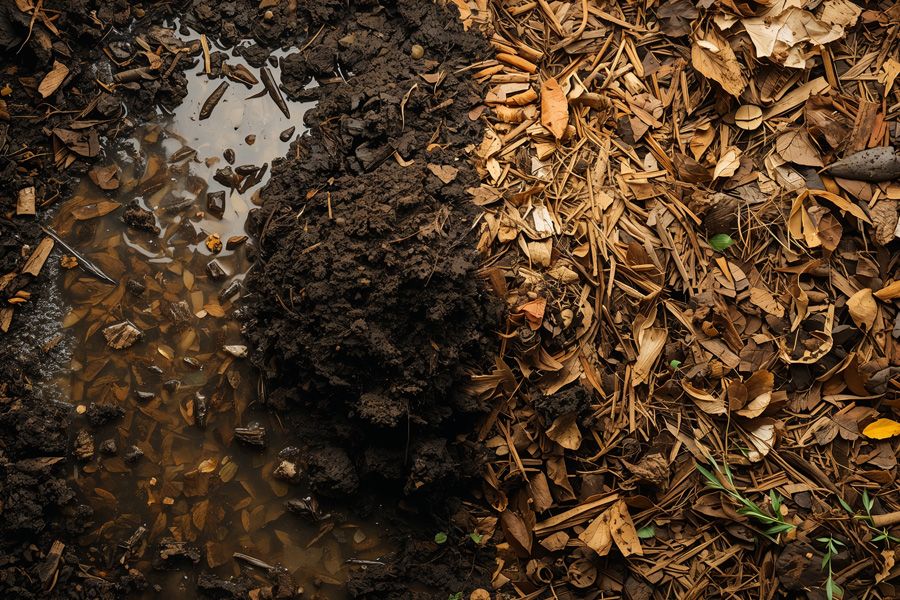
| Too wet | Glossy or saturated material, pooling or free liquid, compaction, stronger odour or slower breakdown. | Excess liquid, weak evaporation, inadequate structure, ventilation problems, high loading or drainage issues. |
| Balanced | Damp, friable or crumbly material with visible structure and no unnecessary free liquid. | Moisture, airflow and carbon structure are broadly working together. |
| Too dry | Hard or crusted material, very dry visible paper, poor mixing or slow breakdown. | Excessive drying, too much dry material, prolonged low use or operating conditions that are removing too much moisture. |
Model-specific guidance comes first. Different composting systems manage liquids in different ways, so signs should always be interpreted alongside the product manual and the way the system is designed to operate.
Why excess moisture creates problems
The issue with a wet composting toilet is not that moisture exists.
The problem begins when excessive liquid fills the air spaces within the composting mass or remains as free liquid faster than the system can manage it.
Aerobic organisms need oxygen.
As the material becomes waterlogged and compacted, oxygen movement can reduce and the biological process can become less stable.
Odour, insects and slow volume reduction can then become more noticeable.
Wet conditions can be caused by several things: higher-than-expected use, insufficient bulking structure, cold or humid conditions, reduced evaporation, ventilation problems, or a liquid-management pathway that is not working as intended.
This is why treating every wet system simply by throwing in more dry material can miss the actual cause.
Why over-drying can slow the biology too
Excessive dryness tends to create a quieter problem.
The toilet may not smell strongly or appear obviously overloaded, but decomposition can slow because microorganisms need moisture to remain active.
Material can become hard, paper may remain visibly dry and the active mass can stop mixing or breaking down as expected.
Users sometimes respond by adding even more cover material because the toilet has been described as a “dry” system.
That can reinforce the imbalance.
The objective is not the driest possible chamber. It is a stable aerobic composting environment.
Moisture balance is closely linked to how the system breathes
Ventilation is one of the most important moisture-management tools in a composting toilet.
Continuous extraction helps carry water vapour out of the system while also maintaining airflow through the toilet and chamber.
If a fan stops, is incorrectly installed, the vent leaks or another room-extraction system overcomes the composting-toilet airflow, both moisture and odour behaviour can change.
This is particularly noticeable in compact bathrooms, cabins and other small spaces.
Moisture management is not only about what goes into the chamber. It is also about how effectively the system moves air and humidity out.
For technical ventilation guidance see the Passive Ventilation Design Parameters Guide and Room Ventilation and Extraction Systems Guide.
Structure matters as much as absorption
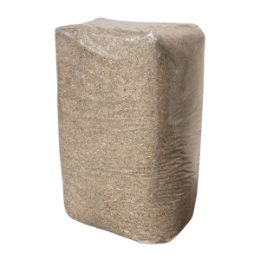
Bulking material is sometimes described only as something that “soaks up liquid”.
That is only part of its job.
A suitable bulking mix also helps maintain physical structure within the composting mass.
That structure creates spaces through which air can move and helps reduce the tendency for the contents to form a dense, wet mass.
Different composting systems require different materials and dosing patterns, so the manufacturer's requirements remain important.
See the WCTNZ® Bulking Agents & Dosing Guide.
Moisture behaves differently in compact and larger systems
A small self-contained system has less physical treatment volume than a large remote composting chamber.
This means changes in loading, temperature or liquid input can become visible more quickly.
Split and continuous systems can provide much greater processing volume and retention capacity, which can create more operating buffer.
But larger does not mean immune.
Every system still depends on suitable ventilation, correct loading and whatever urine or leachate pathway its design requires.
This is also why urine diversion should not be treated as a universal answer to moisture management. Some toilets are intentionally designed to separate urine while many established composting systems intentionally accept urine and solids together.
See Urine Diversion in Composting Toilets: Useful in Some Systems, Not a Universal Rule.
Winter, humidity and changing occupancy can move the balance
A composting toilet does not operate in exactly the same environment all year.
Cold conditions can reduce biological activity and evaporation. High humidity can reduce drying. Additional guests can suddenly increase the liquid and solids load.
A toilet that appears perfectly balanced during one use pattern can therefore need different attention when the season or occupancy changes.
WCTNZ® covers this wider climate relationship in Composting In All Climates.
Correct the cause rather than chasing “dry” or “wet”
If the system appears too wet, start by understanding why.
Check whether the ventilation is operating correctly, whether free liquid is present, whether the product's drainage or urine pathway is functioning as intended, and whether the toilet is being used within a realistic load.
The correct bulking material can help restore structure, but it should not be used to disguise a blocked drain or failed fan.
If the composting mass appears too dry, avoid aggressive correction.
Review the model-specific guidance, the amount of dry material being added, any heater or drying settings where applicable, and the actual use pattern.
Stable composting usually comes from small, appropriate corrections to the real cause — not repeatedly pushing the chamber from one extreme to the other.
A simple way to remember moisture balance
- “Dry toilet” means no conventional flush water — not dry compost.
- Composting biology needs both moisture and oxygen.
- Too much liquid can remove air space and destabilise aerobic conditions.
- Too little moisture can slow biological activity.
- Bulking material supports structure as well as moisture management.
- Ventilation is a major part of both moisture and odour control.
- The correct balance depends on the system design, climate and loading.
Composting toilet moisture FAQs
Does a “dry toilet” need dry compost?
No. “Dry toilet” normally refers to the absence of conventional flush water. Active composting still requires suitable moisture for biological activity.
What should composting-toilet material look like?
A useful general description is damp, structured and crumbly rather than saturated or dusty-dry. Always interpret the condition against the model-specific operating guidance.
What makes a composting toilet too wet?
Possible causes include overloading, insufficient bulking structure, poor ventilation, cold or humid conditions, excess liquid entering the chamber or a drainage or urine-management pathway that is not working correctly.
Can a composting toilet become too dry?
Yes. Excessive dryness can slow microbial activity and leave material hard, crusted or slow to decompose.
Does ventilation affect composting-toilet moisture?
Yes. Ventilation helps move air and water vapour through the system, supports aerobic conditions and is an important part of moisture and odour control.
Having trouble with moisture balance?
WCTNZ® can help identify whether the issue relates to system loading, ventilation, bulking material, climate or the intended liquid-management pathway for your particular toilet.