















Has your compost become too wet, too dry or unusually smelly? A problem doesn't necessarily mean starting again. Once you know what's causing it, you can choose the right correction and, where useful, a treatment product to help the system recover.
Changes in use, airflow, moisture or cleaning products can upset a normally straightforward routine. Insects or odour are reasons to investigate, not automatic signs that the whole toilet needs replacing.
Start with the loading, ventilation, drainage where fitted and the bulking material you're using. Then choose a treatment for the problem you've found. Correcting the cause and supporting recovery go together.
Give the treatment the conditions it needs
If a drain is blocked or the fan has stopped, attend to that first. Restoring normal airflow and liquid management gives a support product the conditions it needs to work. We can help you choose a recovery routine for your model and the state of its compost.
WCTNZ® | Microbiota MicrobeBURST™ Composting Additive
Why use it: MicrobeBURST™ has Boost and Recovery instructions for slow or unsettled composting. These help you support microbial activity once you've corrected the operating conditions causing the problem.
What it is: a ready-to-use microbiota blend with carbon feedstock. Use the recovery instructions for a recovery job; they are distinct from the start-up and everyday applications.
How to use it: follow the relevant MicrobeBURST™ packet directions and the plan for your toilet. Note what you add and when, so you can see the response without several other changes making it hard to judge.
WCT | Compost Black™ Additive 15L Bag — Biochar
Why use it: Compost Black™ can help with an unsuitable mix, excess moisture or ammonia-related conditions. Its porous biochar structure provides surface area and contributes to the physical mix inside the chamber.
What to check: look for the source of excess moisture—heavy use, rain getting in, a drainage fault or an unsuitable bulking mix. Address that alongside the treatment, so the same problem doesn't keep returning.
How to use it: follow the current Compost Black™ directions and the application method for your toilet. A mixing system and a continuous chamber may need different routines.
WCT | Compost Green™ Additive 500g Bag
Why use it: we offer Compost Green™ to support moisture, ammonia and compost-process management. It may help as part of a planned response when the liquid load changes or the mixture becomes unsettled.
What to check: find where the smell starts. It may be the compost, but it could also be poor airflow, the bowl or a urine-container connection. That tells you which part needs attention.
How to use it: use the Compost Green™ instructions for the situation you're dealing with. Record the amount and timing with your other recovery steps.
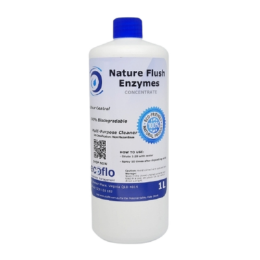
Nature Flush | Enzymes — Concentrate 1 Litre
Why use it: compatible cleaning helps remove deposits around the fixture and urine outlet. Nature Flush also has specified enzyme applications in the composting chamber; check which use fits the job.
What it is: an enzyme concentrate rather than a live microbial inoculant. Cleaning a bowl, treating a chamber and correcting moisture are different tasks, so don't use one mixture for all three unless the instructions call for it.
How to use it: follow the current Nature Flush dilution and application directions. Restore moisture only by the method your model permits. If the chamber is already too wet, adding liquid simply because it's a treatment product can work against that correction.
Insect Treatments and Previously Listed DEEM Spray
Why consider them: a targeted insect treatment may help you regain control after an infestation, alongside correcting the conditions that allowed it to establish.
What to check: identify the insect and where it's breeding. Check gaps, screens, ventilation and moisture. A product sold for garden plants isn't automatically suitable inside a toilet chamber.
How to use it: use the current instructions for the selected product, including ventilation and personal protection. Ask for advice before using a previously listed DEEM spray; a generic spray count doesn't establish the right application for your toilet.
DEBug Diatomaceous Earth 1000g
Why use it: diatomaceous earth controls insects by physical contact. A suitable dry product can damage their protective outer layer and cause water loss.
What to check: identify the insect, where the product will be applied and how wet that area is. Don't assume a surface treatment will eliminate larvae throughout a wet compost mass.
How to use it: follow the DEBug label and advice for your system. Control dust and avoid inhaling it. Choose the application for the actual conditions, not just the number of people using the toilet.
Bambooloo™ | Tamper-Spray — Concentrate & Treatment
Why use it: the product instructions include specified recovery or reactivation uses after a composting upset, chemical exposure or insect activity, as well as preparing the regular working spray.
What to check: establish what happened and whether the affected material can safely stay in the treatment process. Restarting biological activity isn't the same as removing a hazardous contaminant.
How to use it: prepare Tamper-Spray for the particular application and agreed recovery instructions. Keep the ordinary dilution separate from any expressly directed treatment concentration.
Keep track of what you change
Write down the symptoms, checks, product and dose, then note how the system responds. Follow your model's instructions about continued use. If it is overflowing, flooded or seriously contaminated, get it assessed rather than continuing with routine dosing.
When the system is back to normal, return to its usual care routine. Our additives guide covers those products, while odour troubleshooting helps with the first checks if a smell develops again.
A clear record helps you—and anyone helping with the toilet—see what's working. Give the agreed recovery steps time to be assessed before making another change.
Need a recovery plan for your toilet?
Call us on 0800 022 027 with the model, symptoms and recent changes in use or products. We can help you work through the cause and select suitable support.
Sources and product guidance
- WCTNZ® — Microbiota MicrobeBURST™: start, continuous use, boost and recovery
- WCTNZ® — Compost Black™ Biochar: product role
- WCTNZ® — Compost Green™: product role
- WCTNZ® — Nature Flush Enzymes: current cleaning and treatment information
- WCTNZ® — Bambooloo™ Tamper-Spray: current concentrate and treatment instructions
- National Pesticide Information Center — diatomaceous earth fact sheet
- New Zealand EPA — safe use of insect-control products