












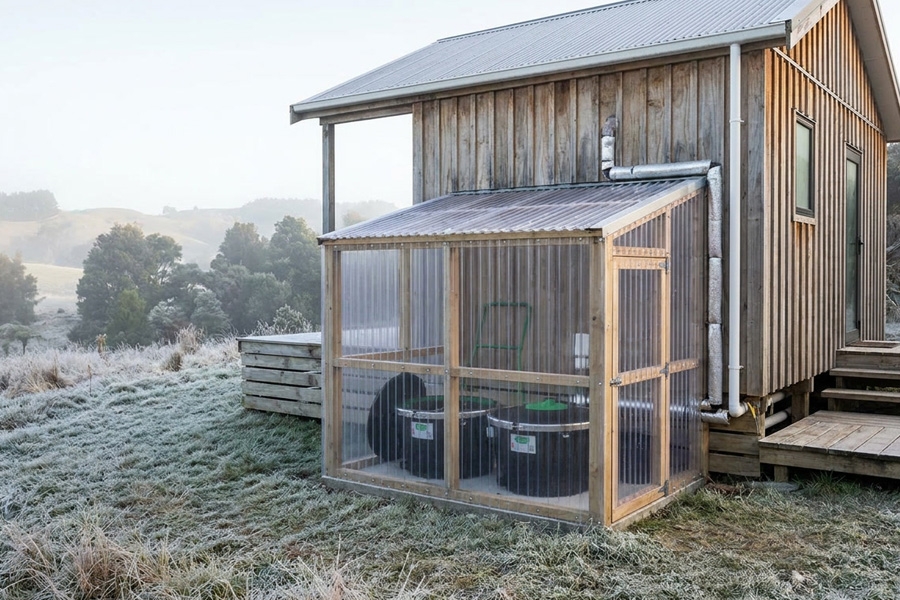
Winter does not automatically make a composting toilet unsuitable.
But colder weather can change how the system behaves.
In many parts of New Zealand, winter brings lower temperatures, wetter conditions, less building ventilation, intermittent use, and more condensation. Those factors can affect composting toilet performance.
That does not mean the system is wrong. It means the toilet needs to be selected, installed, and managed with the site conditions in mind.
Composting is a biological process
A composting toilet relies on biological activity, airflow, structure, moisture balance, and time.
Because it is biological, temperature can affect the rate of breakdown.
In colder conditions, the process may slow. This is normal. It does not necessarily mean the system has failed.
Winter performance mapping schedule
| Winter factor | What can change | Practical response |
|---|---|---|
| Temperature | Biological activity may slow. | Allow for slower processing and enough capacity. |
| Moisture | Damp buildings or excess liquid can affect performance. | Use correct bulking material and keep liquids managed. |
| Ventilation | Buildings are often closed up. | Check the vent route, fan where fitted, and room extraction effects. |
| Seasonal use | A bach may sit unused, then receive sudden heavy use. | Choose for peak winter use, not only average use. |
Seasonal use can be harder than steady use
A composting toilet in a full-time home often has a steady rhythm. The users know the system, the building is occupied, and maintenance habits are more consistent.
A bach or cabin can be different. It may sit unused for weeks, then suddenly receive heavy use from family or guests over a cold weekend.
This stop-start pattern can be more challenging than steady full-time use.
Moisture and ventilation matter
Moisture balance is one of the most important parts of composting toilet performance.
Too much moisture can reduce airflow and create odour risk. Too little moisture can slow biological activity.
Ventilation is just as important. It supports aerobic conditions, moves odour in the correct direction, and helps manage moisture. In winter, buildings are often more closed up, so airflow should not be ignored.
Capacity becomes more important
If colder temperatures slow the biological process, system capacity becomes more important.
A system selected only for light summer use may not suit heavy winter guest use. This is especially relevant for baches, cabins, huts, tiny homes, and remote sites.
Key Takeaways
Winter does not automatically rule out a composting toilet.
Cold conditions can slow biological activity, so capacity, ventilation, moisture balance, and realistic use patterns become more important.
The best winter results usually come from correct system selection, correct installation, clear user instructions, and a simple maintenance routine.
Talk to WCTNZ® about selecting and managing a composting toilet system for colder NZ sites, seasonal baches, cabins, tiny homes and off-grid buildings.
© 2026 WCTNZ® | Waterless Composting Toilets NZ Limited. All Rights Reserved. Unauthorized reproduction, distribution, display, or transmission of any content, design, trademarks, or other materials on this site is strictly prohibited without prior written consent. All intellectual property rights are the exclusive property of WCTNZ® | Waterless Composting Toilets NZ Limited. Continued use of this site indicates your acceptance of our terms and policies, which you affirm to have read and understood. We reserve the right to modify or remove any content at any time without notice. This site and its contents are provided "as is" without warranty of any kind.