












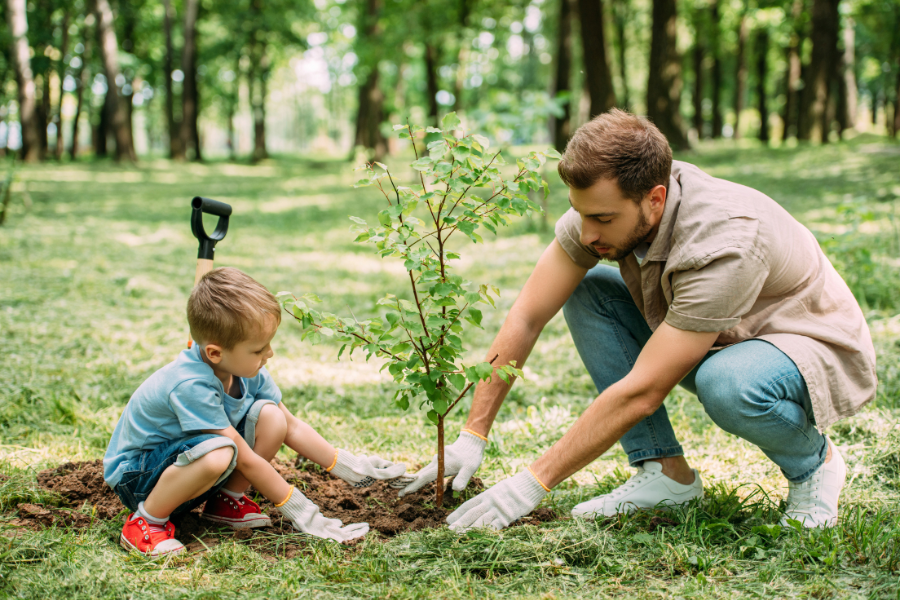
Composting toilets can support reforestation projects by reducing flush-water demand, limiting the need for conventional wastewater infrastructure and creating a pathway for responsible nutrient recovery where treatment and land-use requirements are satisfied.
Their strongest contribution is not a promise that every toilet automatically produces tree fertiliser. It is the ability to manage sanitation closer to the source and to retain nutrients in a controlled system rather than diluting them with large volumes of water.
For reserves, restoration sites, nurseries and rural properties, that can make waterless sanitation a practical part of a wider ecological strategy.
The short answer
Composting toilets can align well with reforestation, but the sanitation and planting pathways must each be designed properly.
Use a purpose-designed toilet, manage residual material through the required treatment and maturation process, and apply it only where the final use is lawful and appropriate. Do not spread fresh or partly treated toilet material around new trees.
Restoring native vegetation needs healthy land and practical infrastructure
New Zealand's native forests have been reduced and fragmented through historic clearance, land development and invasive species. Restoration projects work to reconnect habitat, stabilise soil, protect waterways and strengthen biodiversity.
Those projects also need people on the ground—volunteers, workers, visitors and community groups. Providing sanitation at remote planting sites or reserves can be difficult when water and sewerage are unavailable.
Keep scarce water available for people and plants
A conventional flushing toilet uses treated or stored water to transport human waste. At a remote nursery or restoration site, that water may have been collected from a roof, delivered by tanker or pumped from a limited source.
A waterless composting toilet removes routine toilet-flushing demand. That can preserve stored water for handwashing, drinking, plant propagation and other uses that genuinely need it.
In a restoration project, the first environmental benefit may be the water that never has to be collected, stored and turned into wastewater.
Avoid mixing toilet waste with large volumes of water
Source-separated sanitation can reduce the need for a conventional blackwater tank and dispersal field at sites where those works would disturb land or sit awkwardly near sensitive environments.
The remaining greywater from hand basins or facilities still needs its own suitable pathway. A composting toilet changes the toilet stream; it does not make the site wastewater-free.
A potential resource—after correct treatment
Human waste contains nutrients and organic matter. A correctly operated composting system can reduce and stabilise that material over time.
Where the residual has completed the system's required treatment and curing, and where the proposed use is permitted, it may contribute organic matter to suitable non-food land applications.
That possibility should be handled conservatively. Material removed too early can still contain pathogens. The receiving soil, groundwater, access and plant use all matter.
Reforestation does not create an automatic exemption. Use the model's residual-management guidance and confirm the lawful land-application or disposal pathway for the property.
Sanitation can support—but does not replace—restoration practice
Compost and organic matter can improve soil structure and moisture retention when they are mature and applied appropriately. Vegetation itself then provides the strongest long-term erosion control through roots, canopy and surface cover.
A composting toilet is therefore one supporting part of a restoration system. Species selection, weed management, fencing, pest control, hydrology and aftercare remain the main drivers of planting success.
A visible example of circular thinking
A well-explained waterless toilet can show volunteers and visitors that infrastructure choices affect water, waste and land.
Interpretive signage can explain why the facility avoids flushing, how the treatment system works and why residual material requires controlled management.
That makes sanitation part of environmental education rather than an unseen service at the edge of the project.
Reforestation and conservation applications
- Remote planting sites: temporary or permanent sanitation where sewer connections are unavailable.
- Native plant nurseries: staff and visitor facilities with limited water infrastructure.
- Reserves and parks: public amenities designed around sensitive receiving environments.
- Community restoration hubs: a practical demonstration of waterless and source-separated design.
- Rural properties: household or outbuilding toilets integrated with wider planting and land-care goals.
A volunteer day and a busy public reserve are different projects
Occasional volunteer use may suit a different chamber size from a public facility receiving daily visitors. Weekend planting peaks can create concentrated loading even when the annual total is modest.
Assess occupancy, peak events, climate, power, accessibility, cleaning and who will inspect and service the system. Public projects generally need stronger capacity and documented maintenance than a private rural toilet.
Reforestation and composting toilet FAQs
Can composting-toilet residual be used around native trees?
Potentially, only after the material has completed the required treatment and where the proposed land application is lawful and appropriate. Fresh or partly treated material should not be spread.
Do composting toilets help prevent erosion?
Indirectly. They can support responsible nutrient and water management, but vegetation establishment, soil protection and site design are the primary erosion-control measures.
Can a public reserve use a composting toilet?
Yes. The system must be sized for visitor loading, accessibility, cleaning, ventilation and a long-term maintenance plan.
Does a waterless toilet remove all wastewater from the site?
No. Hand basins, kitchens and other water fixtures still produce greywater that needs a suitable pathway.
Planning sanitation for a reserve or restoration site?
Share visitor numbers, peak events, water availability, access and maintenance ownership with WCTNZ®. We can help identify the right system scale.